
Ritual Potluck
A seasonal gathering where everyone brings a five-minute offering, and together you build a ritual to mark the change of season.
- Cost
- Free–$30
- Time
- 3 hours
- Min. people
- 6
- Effort
- Medium
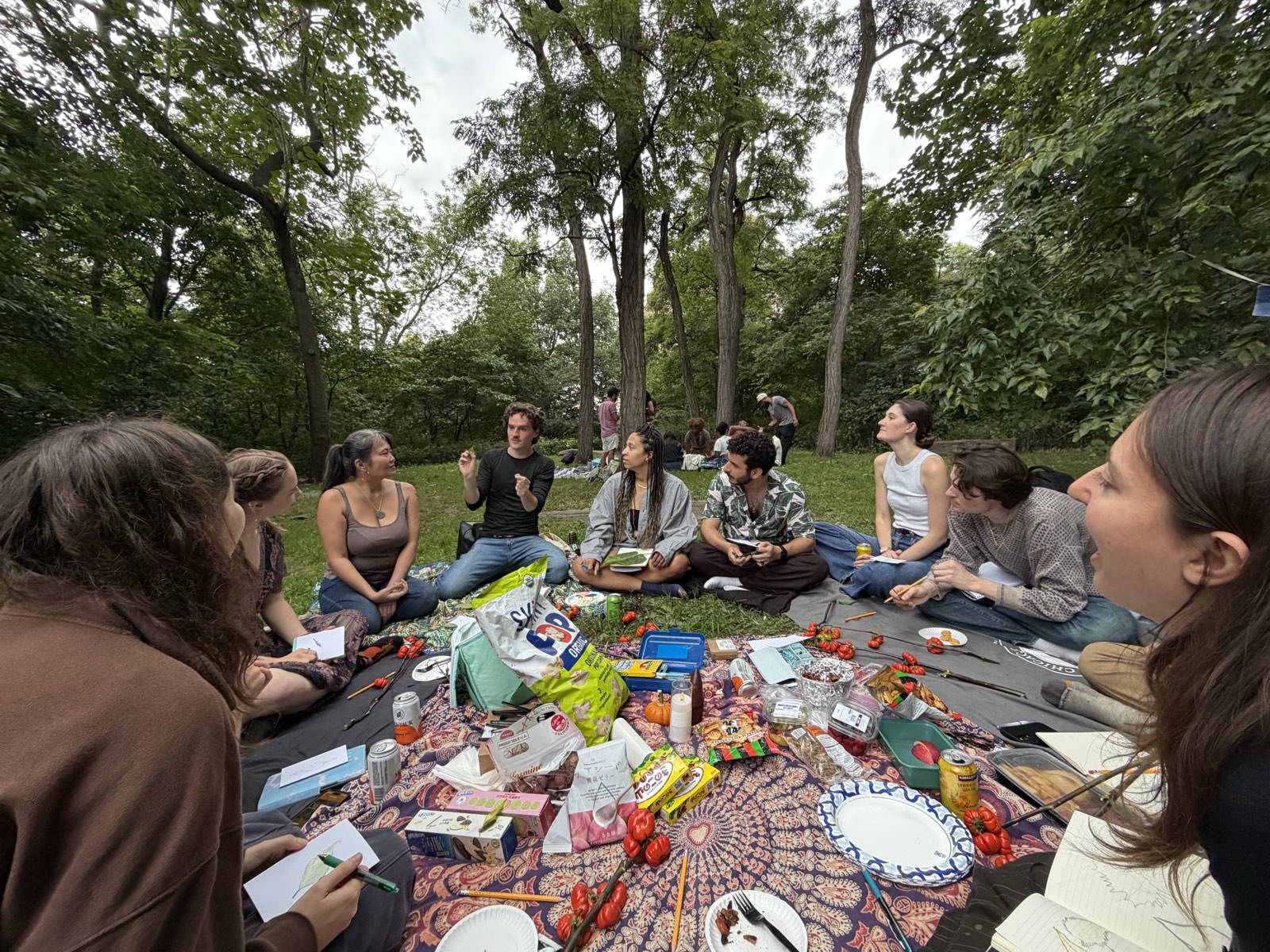
On the first Saturday of autumn, about a dozen folks gathered in a New York apartment. They went around in a circle and one by one, each had five minutes to do an offering to commemorate the changing of the season. When it got to a guy with a background in improv, he decided to build a Macy’s Thanksgiving parade float out of thin air.
He invited everyone in the circle to join in. Everyone started saying out whatever fall meant to them. Someone said pumpkins, so the float got a giant pumpkin head. Someone else said witches, so it got a witch’s body. Another said football, so a game broke out at the bottom. Then everyone climbed aboard the imaginary Macy’s Thanksgiving float and, together, rode it into fall.
“It’s so weird and fun, it’s hard to describe,” says Róisín Goebelbecker, who hosted the night.
The float was one of the offerings of what Róisín calls a Ritual Potluck. Four times a year, on the solstices and equinoxes, Róisín invites 10 to 15 people over to mark the change of season. The only requirement to come to the gathering is to bring a ritual offering that you share with the group in under five minutes: a poem, song, food, story, dance/movement, art piece, reflection prompt, or any other kind of symbolic action. It can be anything that helps the group say goodbye to the old season, cross into the new one, and greet what comes next.
The idea grew out of Róisín’s graduate work in applied theater. Róisín wrote a thesis on ritual-making with people who grew up Catholic but had left the church. “A lot of people leave religion and then just have their own individual spiritual practice,” Róisín says. “But what’s missing is the communal part. Making meaning out of our lives together.”
Seasons seemed like the right place to rebuild that sense of community with those close to her. “Across traditions, people make meaning out of the changing of the seasons,” Róisín says. “You’re not appropriating someone’s religious practice by doing it, because it’s truly everywhere. It’s just what humans were meant to do.”
Two years ago Róisín tried it with family over the autumn equinox. Then she tried it with friends and friends of friends. Then, on New Year’s, she set a resolution: to complete a full year cycle and put every one on the calendar ahead of time so it would actually happen. Róisín emailed everyone who might be interested, sent the invites, and has kept every date since.
Róisín says the dynamic is pretty straightforward. When guests walk in, a playlist of seasonal songs is already playing. Everyone who attends is invited to add their songs. Then, they see a whiteboard with a question written about the season. This summer it was “What smells and images remind you of summer?” There’s a craft table too. In summer, guests cut a sun out of construction paper. In fall, they drew a favorite summer memory and pinned it to a clothesline.
About 45 minutes in, Róisín brings everyone together, has them introduce themselves and share their intention for the ritual today, and then explains the dynamic of the ritual rite of passage: leaving what came before, crossing a threshold, and entering what’s new. Guests split into three groups based on where their offering fits. Inside each group they decide on an order, and then everyone sits in a circle in that sequence. The first person is still deep in the old season. By the time the circle comes all the way around, the room has arrived in the new one.
What happens in between is a surprise to everyone. Last spring, one guest handed out seeds and fertilizer. Another made an herbal drink so everyone could toast. The guy who built the parade float this fall had the whole room turn into seeds sprouting in spring, until he called in a late frost and sent them all back underground. Since the fall ritual was able to happen in a park, an urban ecologist had each guest pick a leaf and sketch it.
“You don’t know what’s going to happen because you don’t know what everybody brought,” Róisín says. “That means there’s a bit of vulnerability and experimentation that everyone’s in together. No one person is leading it. It’s all of us.”
The contributions make each ritual gathering unique. “It’s the same way a potluck meal works,” Róisín says. “You as the host don’t have to make a whole feast. You just provide the space and the structure and the invite, and your friends all contribute a little bit, and then you have this epic feast.”
Folks tend to stick around afterwards. They often walk down to the river and then get drinks. At the end of each one, Róisín announces the date of the next. “Keep an eye out. Bring a friend. And if anyone wants to co-lead it with me, please do.”
Sources
The Rites of Passage — Arnold van Gennep. The three phases the circle moves through: leaving what came before, crossing a threshold, and entering what's new.
What we'll set up for you
- Photo
- Title
- Welcome message
- Description
- Bring list
You can edit all of this.
What you'll need to do
- Set your location
- Find a time and date
- Add your volunteers and asks
- Promote your event We'll provide a poster and social cards. You just need to invite folks.
More blueprints

Friday Morning (Men’s) Garage Coffee
By David L. BurtonA standing Friday-morning invitation to gather over coffee in a garage or driveway. No agenda, no membership, no pressure to stay.

Deadline Dash
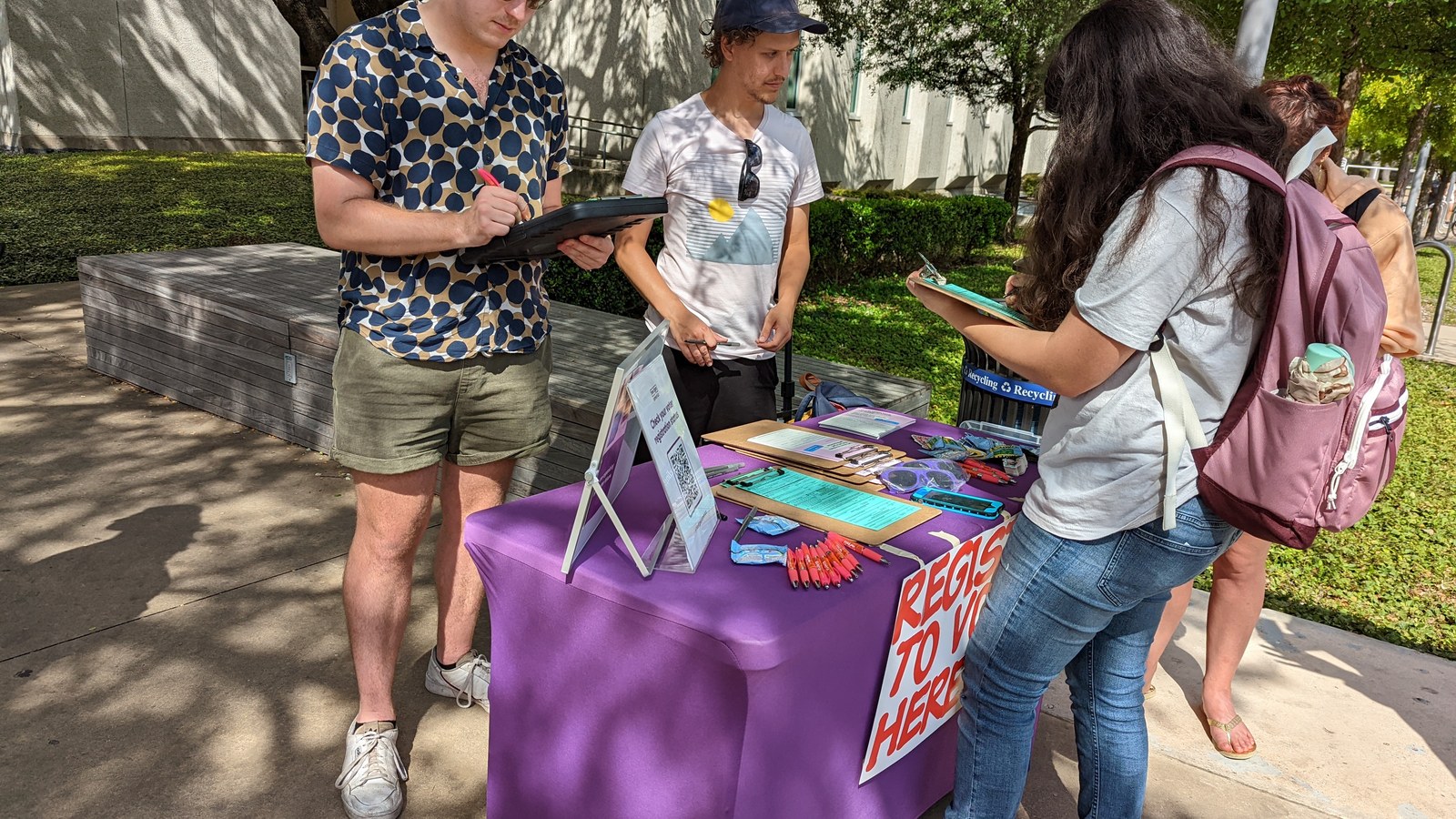
By 10 Steps CampaignThe last day to register, turned into a block party.

Early Voting Happy Hour
By 10 Steps CampaignVote early, then celebrate it. Turn the first day of early voting into the best block party on the calendar.